Table of Contents
UK Tyre Safety
UK Tyre Safety
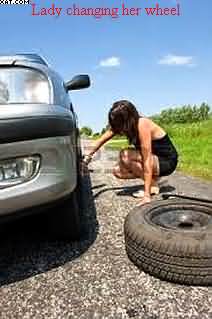
UK Tyre Safety: It is important to remember that correct tyre care and maintenance are essential for your road safety and tyre life.https://t.co/LfYlJzaPne
UK Tyre Safety – why it still matters more than ever
After a lifetime spent working in the tyre industry, it sometimes feels a bit mad that we still have to keep banging on about tyre safety. You’d think by now everyone would understand how important tyres are. And yet, the figures tell a different story. Road accidents caused by tyre-related problems are not falling – they’re rising.
That’s worrying.
One of the biggest factors has to be the sheer volume of traffic on the roads today. We live on a relatively small island, but the number of cars, vans, lorries and delivery vehicles seems to increase every year. You only have to do a normal drive to work and back to see how congested our roads have become, especially around Halifax and the Calderdale area.
More vehicles on the road means:
- more stop–start driving
- more braking
- more standing water in wheel ruts
- and more chances for tyres to be pushed beyond their limits
Tyre safety isn’t just about cars: UK Tyre Safety
Although I tend to write mainly about the UK and everyday motoring, tyre safety applies to all road vehicles. Cars and vans get most of the attention, but trucks, coaches and other commercial vehicles are just as dependent on good tyres.
The difference is that when something goes wrong with a larger vehicle, the consequences can be far more serious.
That’s why tyre safety isn’t just a personal issue – it’s a shared responsibility.
Tread depth – the legal minimum is just that
According to accident statistics, one of the main reasons tyres contribute to accidents is insufficient tread depth. The legal minimum tread depth in the UK – and most of Europe – is 1.6mm across the central three-quarters of the tyre.
Now, let’s be clear about something.
1.6mm is a legal limit, not a safe target.
By the time a tyre reaches that point:
- wet weather grip is already badly reduced
- braking distances are much longer
- aquaplaning risk is dramatically higher
And yet, we still see drivers running tyres right down to the limit – and often beyond it.
Wet roads are the real danger: UK Tyre Safety
People often think snow is the main cause of winter accidents. In reality, that’s not the case. Wet roads are the biggest problem, especially when combined with low tread depth.
A tyre with good tread clears water from the road surface. A tyre with worn tread simply rides on top of it. That’s aquaplaning, and once it happens, you’ve got very little control.
You’d think this was common sense – but time and time again we see tyres left on cars until there’s barely a slither of rubber left. In some cases, they’re not replaced until they’re completely bald.
At that point, the tyre isn’t just illegal – it’s dangerous.
Local roads make tyre safety even more important
Around Halifax and Calderdale, our roads don’t make life easy for tyres. We’ve got:
- steep hills
- tight bends
- shaded sections that stay damp
- uneven surfaces
- and plenty of rain
All of that puts extra strain on tyres, especially when tread depth is low. A tyre that might just scrape by on a dry motorway becomes a real liability on a wet Yorkshire back road.
That’s why we always encourage drivers to check their tyres before they become a problem.
Where winter tyres come into the picture
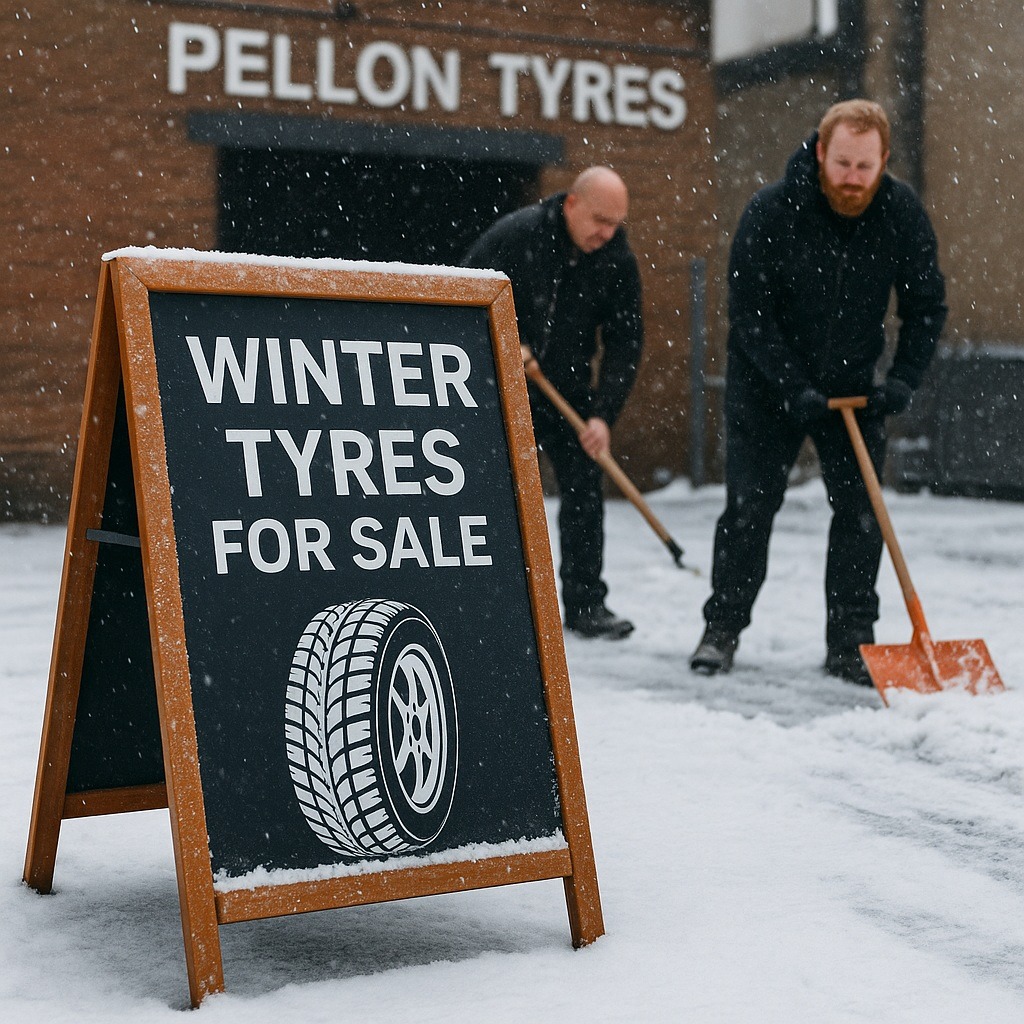
This brings us neatly to winter tyres. Their growing popularity proves just how much difference the right tyre can make in poor conditions.
Winter tyres aren’t just about snow. In fact, their biggest advantage in the UK is:
- better grip in cold, wet conditions
- improved braking on damp roads
- more predictable handling when temperatures drop
They stay flexible in colder weather, while summer tyres harden and lose grip. Combine that with deeper tread patterns, and you’ve got a tyre that’s far better suited to British winters.
For many drivers, all-season tyres are a sensible halfway house, offering better cold-weather performance without the need to swap tyres twice a year.
Simple checks that make a big difference
Tyre safety doesn’t have to be complicated. A few simple habits can dramatically reduce risk:
- check tread depth regularly
- keep tyre pressures correct
- look for cuts, bulges or damage
- don’t ignore warning signs like pulling or vibration
And if you’re unsure, ask. Any decent tyre centre – including us at Pellon Tyres – will happily check tyres and offer honest advice.
Final thoughts from Pellon Tyres: UK Tyre Safety
Tyre safety shouldn’t be something we only talk about after an accident. It’s about prevention, common sense and understanding that tyres are the most important safety component on your vehicle.
With traffic levels as high as they are, and road conditions as challenging as ever, running tyres down to the bare minimum just isn’t worth the risk.
Good tyres, with decent tread and correct pressures, make your car safer in the wet, more predictable in the cold, and more controlled on our hilly Yorkshire roads.
It’s a simple message, but one that still needs repeating:
look after your tyres, and they’ll look after you.driving conditions.
- 235/70×16-General Grabber AT
- Pirelli tyres to supply BRDC F4
- Pothole Britain
- Electric cars-Not so eco-friendly – CNBC
- Michelin Winter Tyres For mums
Tyresafe do great work promoting the important role that tyres play in road safety?