Category Archives: Transfer to Pellontyres Blog

Peugeot 2008 Failed Fuel Additive Pump

Peugeot 2008 Failed Fuel Additive Pump

Peugeot 2008 Failed Fuel Additive Pump

Peugeot 2008 Failed Fuel Additive Pump

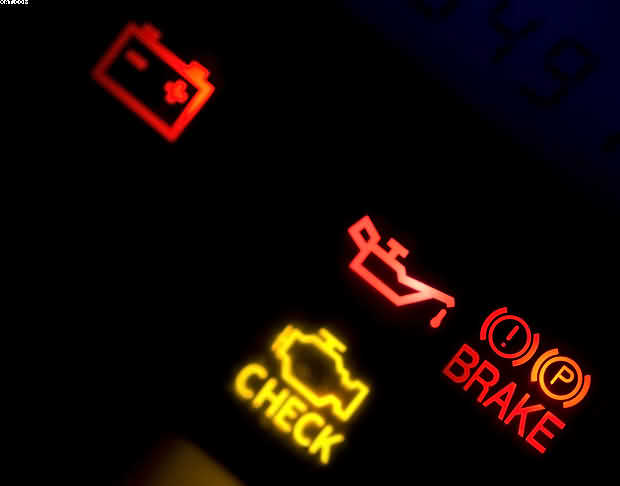
A Peugeot 2008 came into the garage recently with a conspicuous “failed pump” warning light on the dashboard;

These kinds of problems are becoming increasingly frequent.

This is one of jobs that will become a more common site here at Pellon Autocentre Halifax UK.

We immediately began troubleshooting the problem because the driver was worried, as you would be when warning lights appear in the cab. It did not take long to determine that the fuel additive pump was the source of the issue, as it is an essential component in reducing emissions and adhering to more stringent standards.

Like other Peugeot cars, the 2008 model uses PAT fluid

Of course, a unique ingredient that helps cut down on hazardous emissions. If you’re acquainted with AdBlue, it’s quite similar to that.

However, in this instance, the pump that is intended to feed the additive into the fuel system was the problem, not the fluid itself. We had to do some investigating before we could conclude that the pump was really damaged.

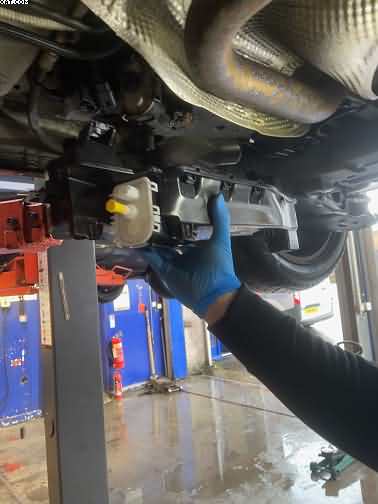
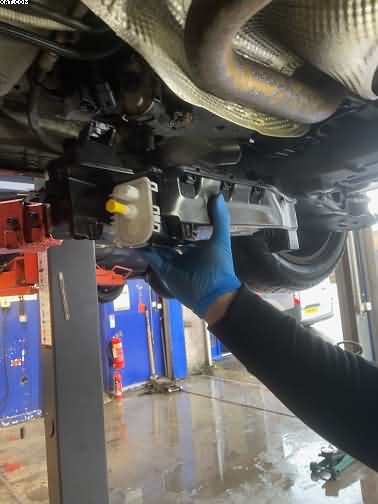
Peugeot regrettably chose to complicate things by integrating the PAT fluid tank and the fuel additive pump into a single unit; thus, replacing the pump alone was not an option. A little more work, but sometimes that’s how things work.

We placed an order for the new unit, which is not typically delivered the next day if you’ve ever dealt with Peugeot components. We quickly had it fitted after it arrived. However, installing the pump and tank is just half the task.

The Peugeot 2008 and other contemporary vehicles

are jam-packed with sensors and electronics, and you have to inform the vehicle when a new part has been installed.

We reset the “failed pump” warning light, reprogrammed the system, and connected it to the diagnostic system. You want to avoid having that thing staring at you after you’ve resolved the issue, don’t you?

Turning on the engine and hearing nothing but the sound of a healthy engine—no lights, no warnings—is always a pleasing experience.

It made me consider-Peugeot 2008 Failed Fuel Additive Pump

As usual, how much has changed in the garage over the years. I recall a time when repairing an automobile only required swapping out parts and turning spanners—nevermind software updates or reprogramming. However, that’s progress, and it’s what keeps us at Pellon Autocentre alert.

Peugeot 2008 Failed Fuel Additive Pump
The customer, who was a resident of Savile Park-Peugeot 2008 Failed Fuel Additive Pump

mentioned that they had visited Shibden Hall for the day. I couldn’t help but say this. It always makes me happy when someone mentions some local history. It’s incredible how much is going on in Halifax, even if you’re only here for a car repair, with Anne Lister and all that!

Therefore, try not to become upset if your Peugeot or any other modern car is giving you warnings. We have the equipment and expertise to fix it when it’s just a broken part, like this fuel additive pump. We’ll have you back on the road quickly if you just stop by. And who knows, maybe I’ll learn a few more tales about your adventures!

Wheel Balancing: All You Should Know

transferred to pellonautocentre blog

Wheel Balancing

wheel balancing

Wheel balancing, also known as tyre balancing, is the process of equalizing the weight of the combined tyre and wheel assembly so that it spins smoothly at high speed.

Source: tyres.about.com

Reasons to Inspect Your Car’s Wheel Balancing

Now, my fellow auto lovers, let’s get started on wheel balancing—another crucial but sometimes disregarded component of automotive maintenance. Although it may not be the most glamorous subject, it is essential for a seamless and secure driving experience. Now, let’s discuss the benefits of including routine wheel balance checks in your auto maintenance regimen.

Wheel balancing: What is it?

Let’s start with the definition of wheel balancing. To put it simply, it’s the act of making sure that the axle of your car is evenly supported by the weight of the wheel and tyre. Wheel imbalance can develop over time as a result of normal driving, bumps, and wear and tear. You should stay away from a number of problems that may arise from this.

Why is it Important to Balance Wheels?

1. Easy Travel

A smoother ride is among the benefits of balanced wheels that are felt right away. You will probably experience vibrations if your wheels are imbalanced, especially at faster speeds. These vibrations have the potential to impair your driving comfort and potentially impair your car control. A fast wheel balancing check can restore your beloved smooth and pleasurable ride.

2. Long-Term Tyre Protection

Similar to wheel alignment, balanced wheels contribute to a longer tyre lifespan. You’ll have to replace your tyres earlier than you’d like to since uneven tire wear is a result of unbalanced wheels. Frequent balance checks guarantee that your tyres wear uniformly, thus saving you money.

3. Enhanced Fuel Economy

You may increase your fuel economy by using balanced wheels, which is another method to save money at the pump. Your car needs to work more to go forward when its wheels are out of balance, which increases fuel consumption. Maintaining wheel balance increases your car’s efficiency, which reduces the number of petrol station stops.

Safeguard Your Suspension

Unbalanced wheels might cause damage to your suspension system in addition to your tyres. Your shocks, struts, and other suspension parts may prematurely wear down as a result of vibrations brought on by imbalanced wheels. Frequent wheel balancing inspections preserve these components and maintain the smooth operation of your vehicle.

5. Prioritising safety

Lastly, but just as importantly, wheel balancing is critical to your security. Particularly in an emergency, those vibrations we previously discussed can impair your car’s steering and control. Wheels that are balanced help your automobile handle correctly and keep you and your passengers safe while driving.

When Is It Time for a Wheel Balancing Inspection?

So, how frequently should your wheels be balanced? Having them inspected every 6,000 miles or whenever you purchase new tyres is a good general rule of thumb. Getting your balance checked is also a good idea if you experience any strange sensations or if you’ve encountered a big bump or pothole.

Wheel Balancing
Wheel Balancing

Final Thoughts

In conclusion, every car owner needs to do routine wheel balance inspections. They safeguard your suspension, increase fuel efficiency, smooth out the ride, and—above all—keep you safe while driving. Therefore, don’t forget to request a wheel balance check the next time you visit the garage. Your car will appreciate it, as well as your peace of mind!

We have all experienced the niggling vibrations. Especially when we are driving on  the motorway due to out-of-balance wheels?

In days gone by, tyre retailers, like myself, used to charge extra for the wheel balancing service. But due to the speed, superior suspensions, and steering of today’s cars, it is important that we balance every wheel when a new tyre is fitted.

The only other time that you will require balancing

is if one of the lead weights comes off while driving. On the odd, very rare occasion, a tyre may go out of shape, but due to the highly mechanised and clean state of tyre factories, this is now very rare.

http://www.pellontyres.co.uk/Content/Page/About+Wheel+Balancing

As a tyre retailer here in Halifax,

Yorkshire, wheel balancing has always been an important part of our job. A few years ago, balancing was an add-on charge , much the same as wheel alignment is today. Today though, wheel balancing is, in my opinion, much more important.

This is because today’s cars are much faster and travel at higher speeds on our highway systems. Alloy wheels are also the normal fitment on many of the new cars made today, making it even more important to have your wheels balanced when fitting new tyres.

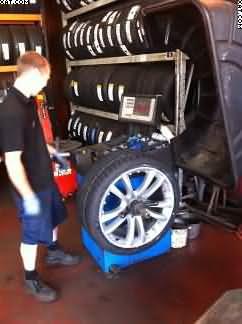
adam ballancing a car wheel at pellon tyres
Wheel Balancing
Having your wheels balanced when fitting new tyres

is now part of the job. We no longer add an extra charge for this service. When your car drives out, it will be ready to use with the knowledge that the wheels will have been automatically balanced when the new tires were fitted. It makes no difference if the tyres are cheap or expensive; the wheels will have been balanced.

Advantages of Winter Tyres: Winter 2024

reposted on pellonautocentre blog

Advantages of Winter Tyres

Advantages of Winter Tyres

Advantages of Winter Tyres

Winter has well and truly arrived in the UK, hasn’t it?

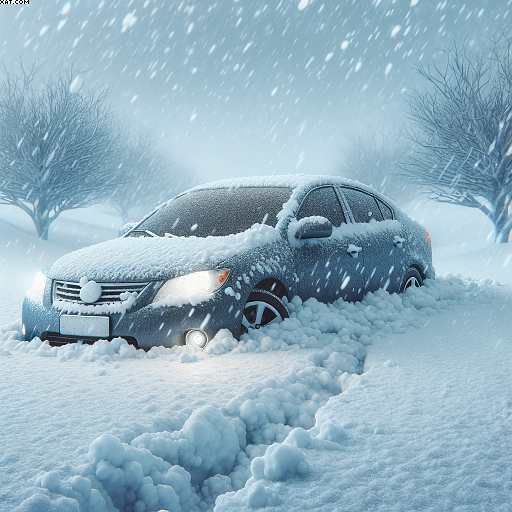
The heavy snowfall in many places can really throw a spanner in the works for us motorists. It’s like Mother Nature decided to give us a bit of a challenge, but fear not, because I’ve got a little piece of advice that can make all the difference during these chilly months:

fitting winter tyres. Now, before you roll your eyes and think, “Oh, not another car-related thing to worry about,” let me break it down for you in a way that’s as straightforward as a cup of tea.

 Winter tyres are not just another expense;

They’re your best buddy when it comes to staying safe on those icy and snowy roads. Picture this: you’re all snug in your car, ready to head out on a frosty morning, and you hit the road with your regular tyres. But guess what? They’re not cut out for the winter wonderland out there. You’ll find yourself slipping and sliding like a penguin on a dance floor. Trust me, it’s not a great feeling.

 So, why winter tyres, you ask? Advantages of Winter Tyres

Well, these specialised wonders are designed to tackle the cold season head-on. They’ve got a unique rubber compound that stays flexible in low temperatures, ensuring you get proper grip on icy and snowy roads.

That means fewer heart-pounding moments when you hit the brakes. But that’s not all, folks. Winter tyres also have a deeper tread pattern, which helps them bite into the snow and slush, giving you better traction. It’s like they’ve got mini crampons on the soles—perfect for our frosty British roads.

Now, I know what you’re thinking

“Do I really need winter tyres in the UK? It’s not like we’re in the Alps.” True, we might not have Alpine peaks, but our lovely British weather can throw some curveballs, can’t it? And when it does, having winter tyres can be a game-changer. Let’s talk about safety for a minute.

Advantages of Winter Tyres

Winter tyres aren’t just about convenience;

 They’re about keeping you and your loved ones safe. When the roads get slippery, your regular tyres might as well be roller skates on an ice rink. Winter tyres significantly reduce the risk of accidents, and isn’t that what we all want? Plus, think about it this way:

 Investing in winter tyres is like having an insurance policy for your car’s safety.

They might cost a bit upfront, but they can save you from costly repairs or, worse, a nasty accident. Now, I can almost hear the grumbling about expenses, but here’s the thing: winter tyres aren’t just for one season.

If you switch back to your regular tyres in the warmer months, your winter tyres will last longer, giving you more bang for your buck. It’s like having a pair of well-worn boots for the snow and swapping them out for comfy sneakers in the summer.

So, my friends, Advantages of Winter Tyres

if you’re looking to stay safe and sound on the UK’s winter roads, consider fitting those trusty winter tyres. They’re not just a luxury; they’re a necessity. And remember, it’s all about keeping things cool, just like a snowman in your driveway. Stay safe out there!

When winter arrives, the cold temperatures, slushy roads, and snowfall can make driving more dangerous. To be safe on the roads in winter weather, it is important to have the right kind of tyres.

Advantages of Winter Tyres, are specifically designed for cold and wet weather conditions and offer better grip and handling than all-weather tyres. Winter tyres are made of a special rubber compound that stays flexible even in sub-zero temperatures, allowing them to maintain their grip on slick surfaces like ice and snow.

They also have wide grooves, which allow them to channel away water and slush more effectively, reducing the risk of hydroplaning. Furthermore, winter tyres feature small, jagged slits in their tread that help create extra traction when driving on snowy or icy roads. When winter arrives, the combination of these features gives winter tyres a significant advantage over all-weather tyres.

Skiers should use winter tyres

Of course, skiers should absolutely use winter tyres on their cars when travelling to their destination. This is because winter tyres are designed to provide superior grip and braking performance in icy, snowy, and wet conditions.

Winter tyres are made from a softer rubber compound that stays flexible in cold temperatures, allowing them to better bite into the snow and ice for enhanced traction.

They also feature a unique tread pattern that helps disperse water and slush from under the tyre for improved grip. Furthermore, these tyres have more sipes (small slits) to provide extra biting edges for better traction when driving on snow or ice-covered roads.

As a result of their superior design, winter tyres provide skiers with a safer and more comfortable driving experience when travelling in winter conditions.

Law in some countries

Importantly, In some countries, it is actually the law to fit winter tyres during the winter months. This is to ensure that drivers have the appropriate levels of grip and traction when it comes to driving on icy and snow-covered roads.

The tyres are designed to provide better grip on icy surfaces as well as increased braking force, allowing drivers to remain safe while driving in winter conditions. Winter tyres are made from special rubber compounds that remain flexible in temperatures below 7 °C, meaning that they can still provide traction even when the temperature drops below freezing.

Additionally, winter tyres also feature special tread patterns

that are designed to disperse water more efficiently, thus reducing hydroplaning and providing better grip when driving in wet conditions. Furthermore, they also feature a deeper tread depth, which provides extra grip on snow- and ice-covered roads. Overall, winter tyres are essential for those driving in cold climates and can greatly improve driver safety during the winter months.

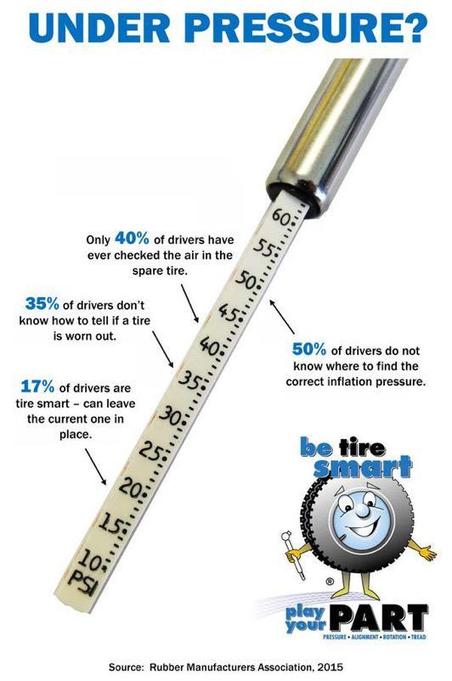
Tyre pressures Cost Money

TYRE PRESSURES COST MONEY

tyre pressures

Don’t know correct inflation pressure? Haven’t checked tyres for a while, don’t worry- let us do it for you-any time #foc pic.twitter.com/qlS9dYRji5

Source: twitter.com

Tyre pressures are very important?

The main thing that drivers are unaware of is whether low pressures result in increased fuel consumption.

That’s right!

Maintaining proper tyre pressure can help save money in a few ways:

  1. Improved fuel efficiency: Properly inflated tyres can reduce rolling resistance, which means the engine doesn’t have to work as hard to move the car. This can improve fuel efficiency and save money on fuel bills.
  2. Longer tyre life: Underinflated tyres can suffer from excess wear and tear, which can shorten their lifespan. By maintaining proper tyre pressure. Subsequently, you can extend the life of your tyres and avoid the cost of replacing them prematurely.
  3. Improved safety: Proper tyre pressure is important for maintaining the stability and handling of your vehicle. Underinflated tyres can be more prone to blowouts and accidents, which can be costly in terms of both repair costs and potential injury.

Overall, maintaining proper tyre pressure is a simple and effective way to save money and improve the safety and performance of your vehicle.

Run-flat tyres

Of course, are designed to allow a vehicle to continue driving even after a puncture or loss of tyre pressure. They have reinforced sidewalls that can support the weight of the vehicle for a limited distance and time. Typically around 50 miles (80 km) at speeds of up to 50 mph (80 km/h). This can be a useful feature in certain situations. Importantly, such as when you have a flat tyre and are unable to safely change it by the side of the road.

However, run-flat tyres have some limitations and may not be suitable for all driving conditions. They tend to be more expensive than traditional tyres, and they may also have a shorter lifespan. In addition, they can provide a rougher ride and may not perform as well as traditional tyres in terms of grip and handling.

It’s important to consider your specific driving needs and preferences when deciding whether run-flat tyres are right for you. It’s always a good idea to consult with a trusted mechanic or tyre dealer to get professional advice on the best tyre choice for your vehicle.

Run-flat tyres were first developed in the 1930s by the Continental Tyre company, but they did not become widely available until the 1980s. The first mass-produced run-flat tyre was the Bridgestone SO-2, which was introduced in the 1980s and used on several luxury car models. Today, run-flat tyres are available from many tire manufacturers and are used on a variety of vehicles, including passenger cars, SUVs, and light trucks.

So, drivers who do not keep up with their tyre pressures are throwing money down the drain. Especially such as larger vehicles such as motorhomes and light commercial vans. 

WHY tyre pressures are important

Because an under inflated tyre has less rolling resistance. Importantly, and will affect your cars performance and reduce your fuel consumption.

We all know that if you have a front tyre that has say a slow puncture, then the car will pull in the direction of the tyre with less air. We imagine the effect if ALL your tyres had less air in them.

The cars engine will be working harder to drive your car along and consequently use more fuel.

So it makes sense to get your tyre pressures checked at regular intervals. Your local tyre dealer will do this free of charge. Here in Halifax Yorkshire UK, we have a regular string of customers, who call in at regular intervals to have their tyres checked and inflated. It only takes five minutes and you then know that you are safer and not throwing money away.

Pressures are important

Pellon Tyre and Auto-Centre offers car and van servicing and repairs to all makes and models of vehicles.  We also sell Continental Tyres online from our website, www.pellontyres.co.uk, by using the tyre selector and choosing your tyre size.

We offer courtesy cars to local motorists who need to go to work and leave their car with us for work. We are also an official MOT testing station.

Pirelli Scorpion Verde Tyres

Pirelli Scorpion Verde Tyres

Pirelli Scorpion Verde Tyres

Pirelli tyres launches eco open-eyed suv tyre.: cWVCd http://t.co/sTvaS11sU0

Source: www.minepointnet-lb.cu.cc

Pirelli Scorpion Verde Tyres

Many of us. including myself, could not foresee the massive rise in the growth of the SUV and Crossover vehicle market. I first saw some of these vehicles. Especially when I was attending a tyre testing day in Austria. The tyre dealers that were invited were all Vredestein (now Apollo Vredestein) stockists.

Some of these vehicles are very powerful. Therefore, it sort of went against the trend of greener cars. In general, cars were getting smaller.Hence, until the upsurge of the SUV and, later, the smaller Crossovers

Pirelli Scorpion Verde Tyres

This meant that tyres also had to change.

These cars included Porsche’s and the VW Tiguan. The BMW X5 and X3, the Audi Q5. Not forgetting the Range Rover Evoque. These were all high-performance cars, and they needed tyres to go with them.

These cars also had to be more environmentally friendly. The tyres became larger in wheel size, some as large as 22 and 23-inch alloy’s. They also had to be quieter with good handling qualities, as well as handle the power of some of these vehicles.

Pirelli Scorpion Verde Tyres

Many tyre companies came up with their own designs, including the introduction of the Pirelli Scorpion Verde tyre. These are truly eco-friendly SUV tyres.

For this reason, the Pirelli Scorpion Verde tyres offer very good rolling resistance. As expected, it is one of the top tyre products to offer this. A better rolling resistance gives the vehicle better fuel economy and, therefore, greener credentials.

Pirelli claims that these tyres are much lighter in weight

because they use fewer materials and will last longer than some of their counterparts. VW has tested the new Scorpion Verde, and the VW Group was the first automaker to mount the Verde on its Volkswagen Touareg SUV.

Pirelli now makes an all-season version of this tyre for SUV owners who may require more traction in the winter months.

http://www.pellontyres.co.uk/Tyre/Details/Pirelli/Scorpion+Verde

Run-flat Tyres Taxis

Run-flat Tyres Taxis

Run-flat Tyres Taxis

Source: home.bt.com

Run-flat Tyres Taxis

The Reasons Halifax Taxis Should Use Run-Flat Tyres

It’s quite unpleasant to be left stuck on a Halifax roadside with a flat tyre, as you may have experienced.

Consider the difficulties a taxi driver faces when attempting to deliver passengers to their locations. Run-flat tyres (RFTs) save the day in this situation.

Dependability and Safety

The purpose of run-flat tyres is to continue driving even after a puncture. They let you travel at a slower pace for roughly fifty miles, which should be enough time for you to locate a garage or a safe place to pull over.

This implies that there won’t be any more unhappy customers or delayed trips for a Halifax cab driver.

You can ensure that customers reach their destinations without any disruptions caused by a roadside tyre change, allowing your day to proceed seamlessly.

Practicality- Run-flat Tyres Taxis

Halifax is not the most convenient site for an emergency stop because of its mountainous topography and small roadways.

Roadside repairs are not necessary while using run-flat tyres. Consider negotiating the congested roads surrounding Piece Hall or avoiding the gridlock close to Shay Stadium;

run-flat tyres provide you with the assurance that a puncture won’t result in a significant delay or missed fare.

Economical

Run-flat tires may cost a little more up front, but they can save costs over time. Consider this: fewer calls for help changing emergency tyres, reduced downtime, and contented passengers.

Not having to carry a spare tyre also has the added benefit of freeing up boot room for luggage or that crucial shopping trip to Halifax Borough Market.

Sturdiness- Run-flat Tyres Taxis

Run-flat tires are made to be more durable than regular tyres. Because they travel more miles than the average driver, cab drivers will find this durability especially useful.

Having tyres that can withstand some damage is very advantageous in Halifax, especially with its cobblestone streets and sporadic potholes.

Better Management

Run-flat tires might improve your car’s handling. Better stability and control can be greatly enhanced by tyres, especially in Halifax where driving conditions combine elements of the city and the countryside.

Run-flat tyres provide you that extra confidence when driving, whether you’re cruising the A629 or negotiating the winding roads of Shibden Valley.

Final Thoughts- Run-flat Tyres Taxis

In Halifax, run-flat tyres are a no-brainer for cab drivers. They provide dependability, convenience, and safety—all essential for maintaining the efficient operation of your company.

The next time your tyres need to be changed, think about the advantages of run-flats and you’ll have more time on the road, happier passengers, and fewer interruptions.

Thus, it may be time to take a closer look at run-flat tyres if you’re considering ways to improve the effectiveness and dependability of your taxi service.

Safe travels, and here’s to many more easy trips through Halifax, our beautiful town!

If you get  puncture problems on a busy main road,

Do you think you could fix it safely? Run-flat tyres are a better idea, and the compromise in ride quality is a lot smaller than it used to be.

Many of the new cars that are manufactured today are coming out with various safety tyres.

At first, I was not too sure about them, but I am now a fan of the tyres for their safety aspects.

There has been much written about this type of tyre, but going back to the basics, they are a really good safety feature of any car.

Especially when they are used in conjunction with a tyre pressure monitoring system (TPMS).

I would also like to be a little controversial and suggest that we make it a law that all public transport vehicles be fitted with run-flat tyres. We all know about the tragic accidents that tyre blowouts can cause, whatever the reason.

I think that all taxis, including mini buses, should be fitted with runflat tyres as a major safety feature. Thus preventing the chance of tyre accidents.

Run-flat tyres should be used on Taxis and Mini buses

I know this will upset the owners of taxis, but we as the public have to rely on the taxi owners to fit good tyres onto their cars. The addition of run-flat tyres would make these cars much safer for the public who have to use them.

Run-flat Tyres Taxis
Changing a wheel could be a thing of the past?

At the moment, run-flat tyres are more expensive than a normal tubeless car tyre. This, however, could be short-lived with the introduction of some economy brands, bringing out run-flats.

Run-flat Tyres Taxis

This will make the tyres more competitive and bring down the price. I know for sure that many taxi companies here in the north of England now use part-worn tyres. This is just false economy and a safety risk to their passengers. The other option could be self-sealed tyres, which would also be a safer option.

http://www.pellonautocentre.com/blog/runflat-tyres-by-bridgestone-tyres/

Michelin buys Allpneus

Michelin Buys a 40 % stake in the French market leader in online tyre sales, Allpneus, for 60 million euro.

Michelin buys Allpneus

Source: www.retaildetail.eu

Michelin buys Allpneus
Pilot Sport Cup 2

Wow this is a shock?

Michelin buys Allpneus

A tyre manufacturer openly buying into an online tyre business?

In my opinion, this will change the ball game and open the door for all sorts of ducking and diving amongst tyre manufacturers and wholesalers.

Will Michelin now miss the tyre wholesales out of the equation. By going online, they are certainly missing out on the middle man? the tyre wholesalers.

Watch this space-Michelin buys Allpneus

http://www.pellontyres.co.uk/Tyre/Brand/1272/MICHELIN

Michelin buys French Online Company ALLPNUES Throw Down the Gauntlet with the 40% Acquisition

Wow I have been saying for the past two years that we in the tyre trade are living in interesting times, but this announcement is one of the most interesting stories I have yet to come across?

Michelin are going online? Michelin buys Allpneus

This will be done with a 40% acquisition of the French online tyre retailer “Allpnues”. The online tyre company sold 3 million tyres online last year, which accounts for 7% of the French tyre market.

Michelin to use ATS as the fitting stations

Michelin has also announced that they are going to use their network of ATS tyre depots to carry out their fitting work across Europe.
When I first read the story, I thought that Michelin was just going to supply France and use the French ATS depots, but they say that they will be using all the ATS depots across Europe.

Michelin buys Allpneus
Michelin Number 1

I did notice that some of the local ATS depots were not doing any truck work anymore and have been smartened up for retail, and so this has been a plan of theirs for some time.
One thing is for sure: this will kick off repercussions amongst tyre wholesalers, and there will be a big rush from the other tyre manufacturers to compete on the same lines. This effectively means that Michelin is missing out on the middle man, which at the moment are the big tyre wholesalers.


I can remember years ago when Michelin decided to go into ASDA to sell tyres. Michelin buys Allpneus

This too caused a huge rumpus and I think that it was ATS who eventually stopped the process and Michelin closed down the tyre shops within the supermarket. This time, ATS will be one of the main players and have no complaints.

I also wonder what Michelin will do with other brands that Allpnues also sells? Will they be pushing out their own product? I think so. It is a big investment to make just to sell Dunlop’s and Continentals products.


Whatever happens, it has certainly changed the game, big style? But I can’t help feeling that this is the way to go; it makes good business sense and will cut out the middle man, as I have stated earlier. It could be the start of another dot-com boom, but in the tyre industry, watch this space?

Michelin Agilis 51 Van Tyre

Michelin Agilis

Michelin Agilis
Michelin Agilis

Michelin Agilis

My VW Transporter T5 T30 2.5Tdi 130 Kombi camper van has been developing an increasingly bad droning / humming noise when travelling at speeds over …

Source: www.youtube.com

This is an interesting video to watch as it very rare to see a faulty Michelin Agilis tyre?

http://www.pellontyres.co.uk/Tyre/Brand/1272/MICHELIN

Michelin Agilis Van and Motorhome Tyres

I am still of the opinion that the Michelin tyre product is the best one in the world. Other tyre companies come a close second, such as Continental Tyres, but the radial tyre inventors are still king, in my opinion.
The Michelin Agilis range of tyres is no different and offers excellent quality, both for vans and motorhomes.

The Agilis is kept in high regard by the people who buy these tyres for their vehicles, and this includes the Agilis Camping, which has been specially designed for the drivers of motorhomes.

These tyres are marked up as an M+S tyre

So, this is for when the motor has to park on soft ground or surfaces.
The other Agilis tyres in the range are the 41/51 and 61 Van tyres that have a reputation for big mileages and are original equipment fitments on VW’s and some of the Mercedes range of vans.

Michelin Agilis tyre problems

I have always been the first to say that I have never seen a genuine Michelin FAULTY tyre, until perhaps now?
We recently had a customer call in with his van.

The van was fitted with Michelin Agilis 51 tyres. The guy was experiencing vibrations when driving at about 60 mph. We immediately diagnosed a wheel balancing problem and balanced the wheels accordingly.

michelin agilis
Michelin Agilis shows various stages of the problem

My fitter reported back to me

that the wheels were difficult to balance correctly, but he did the job, and the guy paid and went away. I have learned in the past that if the wheels are not straight for balance, there will be a problem with the tyre.

It can mean that the steel belt is not stable due to some problem with the tread separating from the tyre casing, (the rest of the tyre).
In this case, we have not seen the guy come back yet, but I decided to do some research on some internet forums, because I do believe that the tyres could be faulty?


Other van users have been experiencing problems with the Agilis 51 tyre?

The problems start with balancing issues, followed by bulges developing as the tyre goes out of shape. This is a relatively common problem with tyre companies. Over the length of my career in tyres, but never with Michelin.
A few van drivers were having these problems. But not with the Agilis 61 tyres. Until the guy suffers any more balancing problems. Then this is only my first personal experience with this Michelin problem.

It is possible that the tyres have been misused by the drivers;

We all know what tight schedules the van drivers have to stick to these days. But I just thought it was an interesting topic.
Pellon Tyre and Auto-Centre offer car and van servicing and repairs to all makes of vehicles.

Michelin CrossClimate Tyres

Michelin CrossClimate

michelin crossclimate

Not a winter tyre, not a summer tyre … not even an ‘all-seasons’ tyre – so what is the CrossClimate? | PistonHeads

Source: www.pistonheads.com

Michelin CrossClimate

This new tyre from Michelin CrossClimate. I think that the new tyre will be a success but will not affect the sale of true winter tyres.

In an excellent reply, a representative from Michelin explained why the new tyre is different. As a result, it is not the same as an all-season tyre. because of the sipes and the compound of the tyre.

Michelin CrossClimate in the debate?

The Michelin CrossClimate tyre has at least sparked conversation among tyre retailers. What kind of tyre is it?
Later in my piece, I’ll get to the answer. We’ve had different tyres for years. originating from different tyre manufacturers, of course.

These have been marketed as all-season tyres. Alternatively put Obviously, a tyre that can handle the summer’s dry, sunny weather. Consequently, will also deal with bad weather during the winter, such as ice and snow.
I think the goal was never entirely accomplished. A persistent issue has always existed in achieving this.

Combining the proper compound with the tread design is challenging. As a result, you would need winter grip in the snow.
A good winter tyre has always been produced by Vredestein, which is currently owned by Apollo Tyre. Over the years, it has garnered numerous honours. however, in my view.

Michelin CrossClimate

We always found it difficult to sell the “Quatrac,”

which was an all-weather tyre. It appeared as though the customers knew exactly what they wanted.
Halifax, Yorkshire, United Kingdom There is a large demand from drivers for the installation of winter tyres.

because our neighbourhood is so mountainous. Thus, snow is a reality for the entire winter season. They are steadfast in their desires. Due to the winter tyres installed on their cars and SUVs, they want to be the ones who can drive themselves to work and school on snowy mornings.

The Michelin CrossClimate

started a great discussion in a LinkedIn tyre forum, where some members questioned whether this tyre was any different from those that came before it. However, I received a fantastic comment from a Michelin Guy who explained why the CrossClimate was unlike any other tyre before it.
As soon as I have the author’s consent, I will publish the comment.

For more interesting reading  http://www.michelin.com/eng/media-room/press-and-news/michelin-news/Innovation/The-new-MICHELIN-CrossClimate-tire-a-turning-point-in-history

targeting the 65% of European drivers who use summer tyres year-round, the 5% who use winter tyres year-round, and the 4% who use all-season tyres. These numbers come from the surveys we did, and Michelin made the CrossClimate to meet the needs of real users, not because VW asked them to.

The goal is to be able to move

(get traction and stop) no matter what the weather is like in temperate areas where snow falls occasionally while being ready for quickly changing weather conditions. Michelin continues to advise customers who frequently deal with these weather conditions to adopt winter tyres, which are created to offer the best overall performance in snow and ice situations.


The technologies that go along with this make it possible

for this performance to happen in both summer and winter. Due to the big tread blocks with auto-blocking sipes, which also ensure a tyre life equivalent to that of a summer tyre, dry performance near that of a summer tyre (Michelin Energy Saver+) is feasible.
Due to the silica-based compound, unique tread pattern, and intricately designed sipes, wet performance is feasible.

Forward to 2024

Drivers have taken a rapid liking to Michelin CrossClimate tyres due to their remarkable dependability and versatility. The unique design of these all-season tyres, which blends the advantages of summer and winter tyres into one package, has won praise.

This makes them perfect for coping with the erratic British weather, which can range from dry and mild conditions to icy and wet roadways. Drivers value Michelin CrossClimate tyres’ increased durability, improved grip, and shorter stopping distances.

They’re a popular option for drivers looking for dependable performance without having to replace their tyres on a seasonal basis because of their capacity to offer a safe, comfortable, and fuel-efficient ride all year round.

Apollo Tyres- Manufacturing Facility

Apollo Tyres
Apollo Tyres

A Day At Apollo Tyres Manufacturing Facility In Chennai – Plant Visit Report

An absorbing article about one of the world’s up-and-coming tyre manufacturers The Indian tyre giant Apollo Tyres is now expanding across the world via various buyouts.

www.pellontyres.co.uk

When I first read this article, I was reminded of my past visits to tyre factories here in the UK. I now know that the tyre-making facilities are very modern and hygienic.

As expected, far from the days in the 70’s and 80’s.
The very first tyre plant that I visited was at Fort Dunlop. On the outskirts of Birmingham in the West Midlands, UK.

Fort Dunlop was a massive tyre making facility. For this reason, it was one of the area’s largest employers. You could see the huge factory from the M6 motorway, with its massive “Dunlop” sign on the top of the building;

it was a landmark that you would never forget once you saw it.

You could see the huge factory from the M6 motorway. Thus, with its massive “Dunlop” sign on the top of the building, it was a landmark that you would never forget once you saw it.


I was a young man at the time.  I can remember seeing the motorsport division as we approached the main factory. It was a very exciting time for me. As it was to be the first time.

Apollo Tyres

I knew that this would increase my knowledge.Naturally, about the product and that it would give me a better understanding.especially of the tyres that would give me a decent standard of living for the rest of my life.
Strangely enough, the thing that stuck in my mind was at the end of the production process.

With all the tyres hung onto a conveyor belt, ready for checking by an inspector, I also remember that mixed brands were coming off the final inspection line.

Apart from Dunlop tyres, I saw Indian tyres being made. I knew that Dunlop made India tyres, but now that I had seen it myself, it gave me greater confidence when I returned to my depot in Huddersfield, Yorkshire, UK.

Apollo Tyres would buy out Vredestein Tyres from Holland

Later on in my career When I owned my tyre centre. I had the pleasure to become a dealer for the excellent Vredestein tyres. Vredestein is a Dutch company.

Naturally, they have a reputation second to none for quality and value and build their tyres in a factory that I had the pleasure of visiting on three occasions in Enschede, Holland.


They became a vital supplier to me and helped build the business into what it is today.

Vredestein was to be eventually bought out by Apollo Tyres, but before that, I enjoyed many trips to their factory in Holland.
The Vredestein factory was to be the cleanest and most efficient tyre company that I had ever seen.

I was always given the best treatment, and this only cemented our business relationship and my enthusiasm for Vredestein tyres.

apollo tyres
Apollo Tyres

However, like many smaller companies, Vredestein Tyres started to grow and sort of left the little guys a bit behind.

They became more aggressive with their marketing tactics, and as a small tyre retailer in Halifax, we started to drift apart, and I could not get the right deal from them.

The Vredestein sales manager, whom I had known for some years, retired, and I used this particular time to change my main supplier of mid-range tyres to Toyo Tyres of Japan.


Vredestein makes some of the best winter tyres in Europe and can sell all that they make.

They were to become a prime target for Apollo tyres.

Vredestein had used proclaimed star car designer Giorgetto Giugiao to design their tyres in the late 90’s, and the brand of Vredestein had become much sought after in the tyre world.
Thus, Vredestein was now making up to six million winter and summer car tyres and was to become a prime target for the Indian tyre company Apollo Tyres, and the acquisition took place in 1999.


The company is now known as Apollo Vredestein Tyres, and some of the production of things like cycle tyres and tubes has to be done at an Apollo Tyres factory in East Asia.

Also, Vredestein is renowned for their tractor tyres, and some of these will now be made in the Apollo tyre factory in India.
Finally, I am very pleased that I once again have access to the Vredestein products. 

Source: www.motorbeam.com