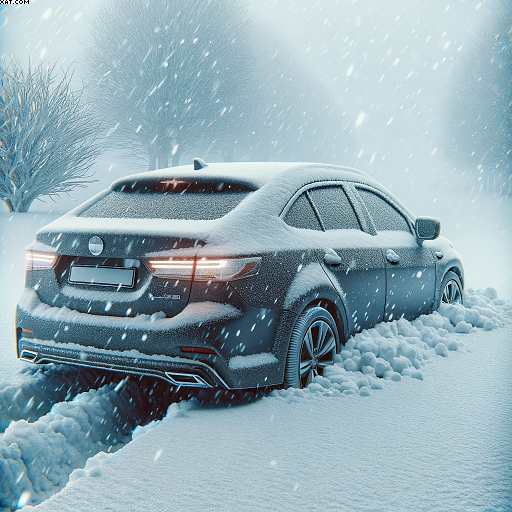
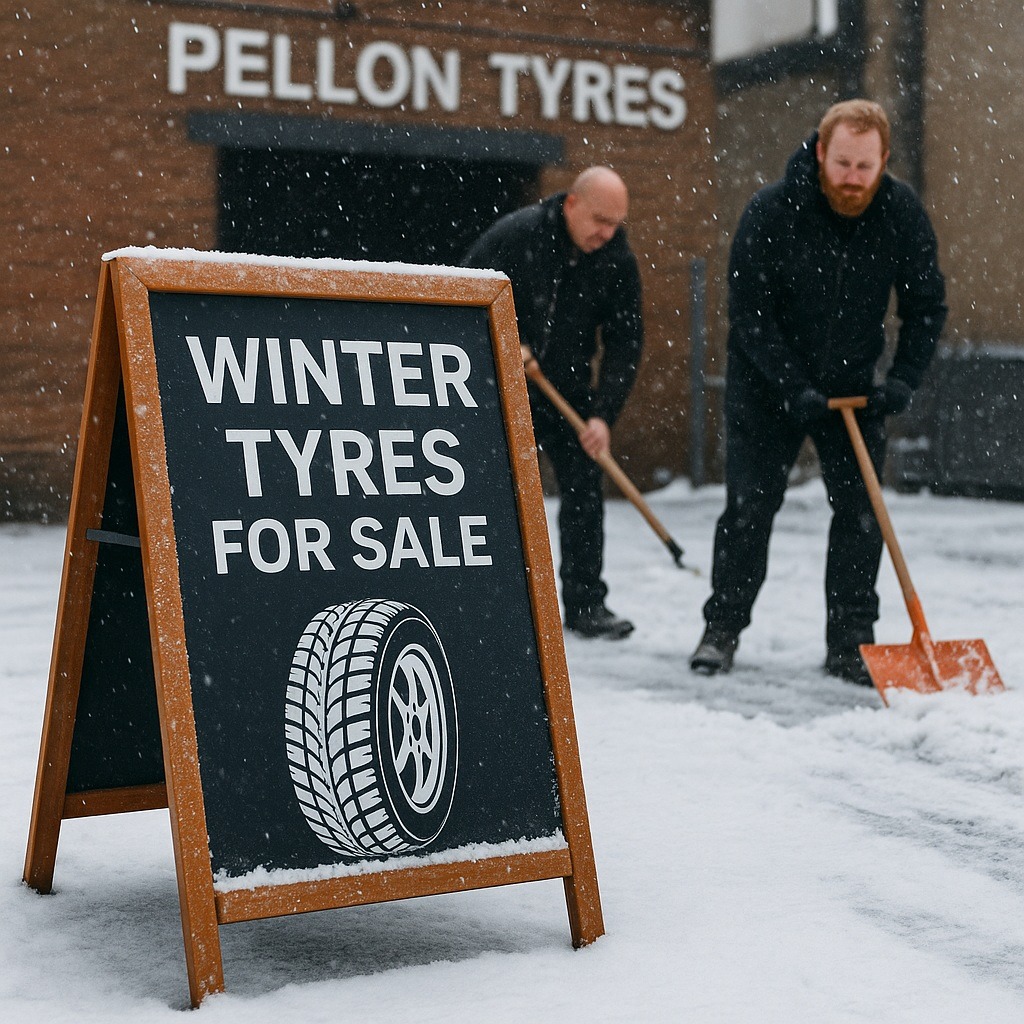
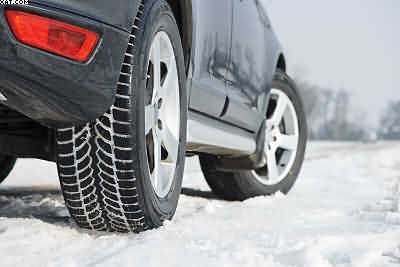
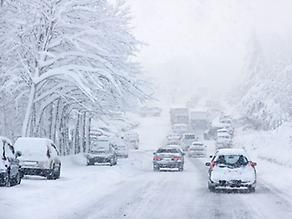
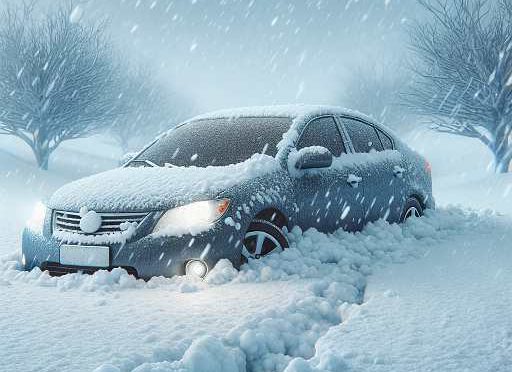
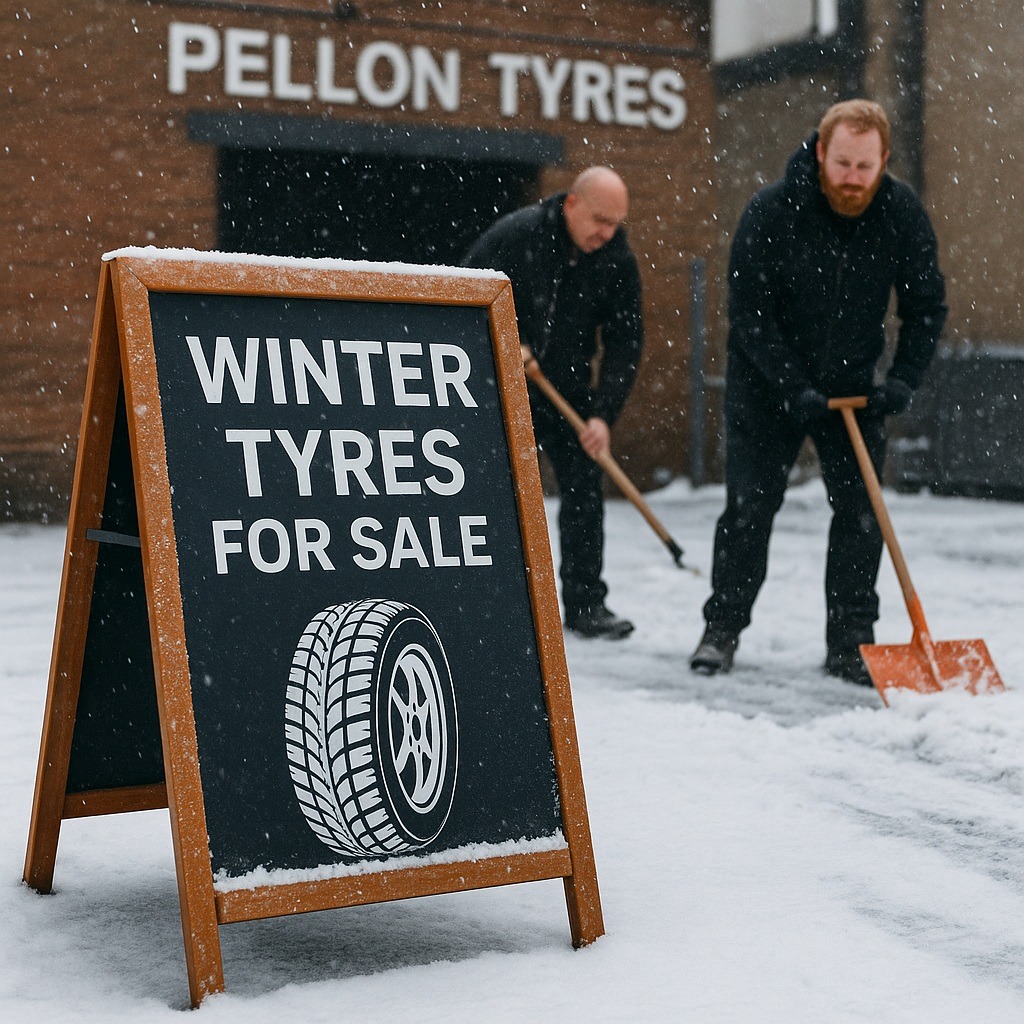
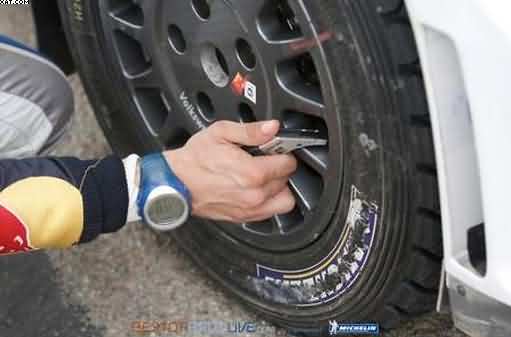
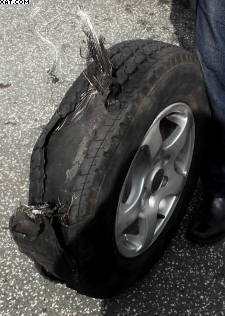
The moment when you realise you should have bought winter tyres #scottishwinter #winteriscoming https://t.co/Df8PNOBBbK
Eric Roberts sourced through Scoop.it
This is the problem? it is often too late if you did not get prepared for bad weather before the winter. Many drivers simply get caught out, when the snow arrives unexpectedly. This Winter Tyres Tweet shows the point.
I also think that it is the younger generation of drivers, who seam to be the ones caught out? I think it may be the “it will never happen to me scenario”. It is important to fit winter tyres before the onset of winter, then you know that you will be much safer, and winter can throw all it wants at you, at least you will stand a chance.
I am convinced that the tyre trade
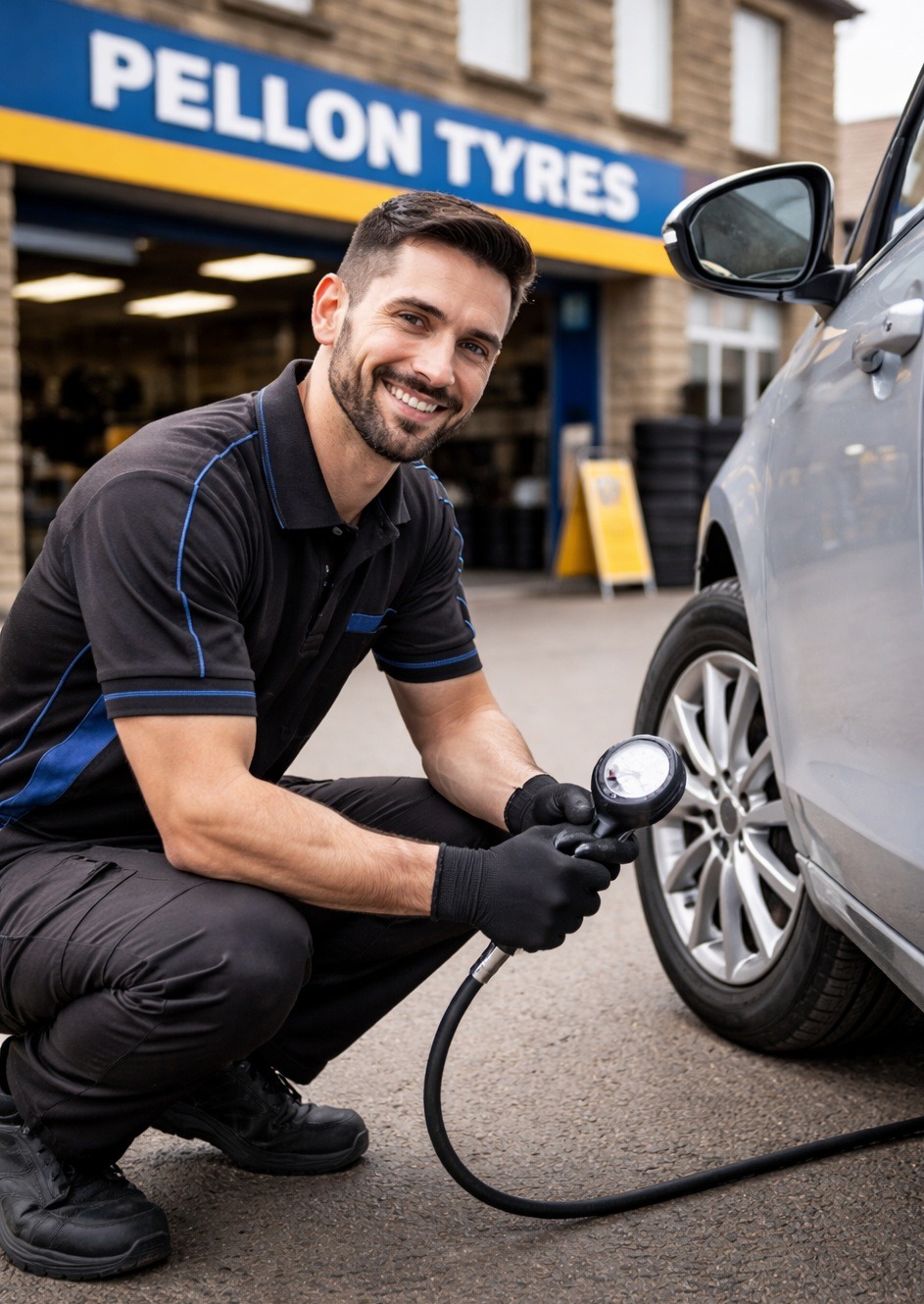
are not targeting young drivers when it comes to teaching about tyre safety. As the owner of Pellon Tyre in Halifax, UK, i am finding it more common for young drivers to make tyre-related mistakes that only slight observations would correct. This includes running on tyres that are completely bald and well over the legal limit. many young drivers, including married and single people, do not appear to know or just do not want to know anything about
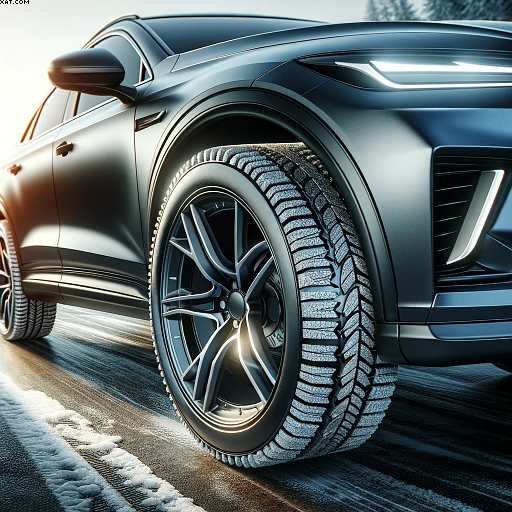
Snowflake emblem on the tyres sidewall, winter tyre marking
the car, especially the tyres? This brings me back to winter tyres. Any driver who fits winter tyres on a regular basis, knows how much safer it is to drive about in winter weather.
Even in heavy rain,
Hence, the driver will feel much safer. Especially with a good set of winter tyre fitted to their car. You can handle anything that a British winter can throw at you. Some of these young drivers are driving around without any tread. Scarily, on their summer tyre, never mind winter tyres.
Winter Tyres tweets from these drivers. hence, are also the ones that take the risks on bends and speeding on our roads. This is combined with bald tyres.
Consequently, this is a recipe for disaster.
Unfortunately, this is what happens. How often do we see a car on its roof in a ditch? too often, many would say. So lets target young drivers with more education about tyre safety and the use of winter tyres.
Tyre Inspection Imperative – why regular checks really matter
In today’s fast-moving traffic and ever-busier roads, it’s never been more important to keep an eye on your tyres. Cars are quicker, roads are more congested, and journeys often involve a mix of town driving, fast A-roads and motorway miles. Against that backdrop, the phrase “Tyre Inspection Imperative” has never rung truer.
Here at Pellon Tyres, we see first-hand what happens when tyres are ignored. Many customers simply don’t realise how much difference one tyre can make to the way a car handles, stops and keeps you safe. A tyre isn’t just a round bit of rubber – it’s the only thing connecting your car to the road.
One tyre can change everything: Tyre Inspection Imperative
A surprising number of drivers don’t notice a slow puncture or gradual loss of pressure. We had a chap in recently who openly admitted he’d had a screw in his tyre for weeks. His solution? Pump it up every week and carry on.
He genuinely thought he was doing the right thing.
In reality, he’d probably been driving up and down the motorway with a tyre running at half the correct pressure. That’s a frightening thought when you consider braking distances, steering response and heat build-up at speed.
Anyone who’s driven a car with a partially deflated tyre will know it never feels right. The steering pulls, the car feels unsettled, and it constantly drags towards the side with the low tyre. It’s tiring to drive and far harder to control, especially in an emergency.
Why under-inflated tyres are dangerous
When a tyre is low on pressure, several things happen at once:
On faster roads, this can quickly lead to tyre failure. The driver often gets little warning before a blowout.
Vans – some of the worst offenders: Tyre Inspection Imperative
Some of the most worrying tyre conditions we see belong to van drivers. Many vans spend their working lives fully loaded, yet tyre pressures are rarely adjusted to suit the weight being carried.
In the worst cases, you can see the driver physically fighting the steering wheel to keep the van in a straight line. That’s usually a combination of:
low tyre pressures
heavy loads
worn tyres
Add motorway speeds into the mix and it’s a recipe for disaster. Tyre blowouts on vans are far more common than they should be, and in many cases they’re entirely preventable with basic inspections.
Regular inspections save more than tyres
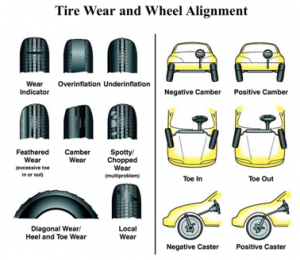
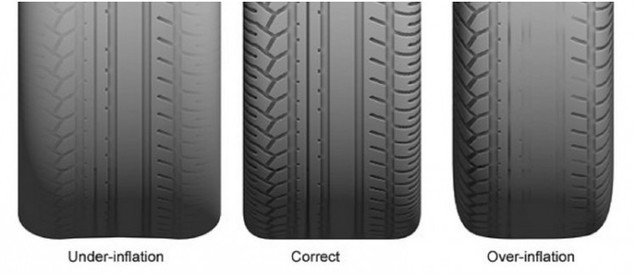
Checking your tyres regularly doesn’t just prevent punctures or blowouts – it saves money too. Correctly inflated tyres wear evenly, last longer and improve fuel economy. Under-inflated tyres scrub away at the edges, over-inflated ones wear down the centre, and both cost you more in the long run.
A proper tyre inspection should include:
Tread depth across the full width
Tyre pressures (when cold)
Sidewall damage or bulges
Nails, screws or cuts
Uneven wear patterns
It takes minutes, but it can prevent hours of trouble at the roadside.
Yorkshire roads make tyre checks even more important: Tyre Inspection Imperative
Driving around Halifax and Calderdale adds its own challenges. We’ve got:
steep hills
tight bends
narrow roads
rough surfaces
and the occasional pothole waiting to catch you out
All of that puts extra strain on tyres. A tyre that might just cope elsewhere can quickly become a problem on local roads, especially in wet or cold conditions.
That’s why we always say tyre inspections aren’t something to do “now and then” – they should be part of your routine.
A word for new drivers
Tyre safety is something young drivers often overlook. There’s a lot to learn when you first start driving, and tyres don’t always get the attention they deserve. Visual aids and clear explanations can make a huge difference in understanding how tyres affect safety, handling and confidence behind the wheel.
Learning early to check tyres properly is one of the best habits a new driver can pick up.
Final thoughts from Pellon Tyres
The message really is simple: tyre inspection is imperative. One neglected tyre can compromise the safety of the whole vehicle. Whether it’s a family car, a van loaded for work, or a daily commuter, tyres deserve regular attention.
If you’re unsure, pop in and let us take a look. A quick check can prevent a blowout, save money and, most importantly, help keep you safe on the road.
UK Tyre Safety: It is important to remember that correct tyre care and maintenance are essential for your road safety and tyre life.https://t.co/LfYlJzaPne
UK Tyre Safety – why it still matters more than ever
After a lifetime spent working in the tyre industry, it sometimes feels a bit mad that we still have to keep banging on about tyre safety. You’d think by now everyone would understand how important tyres are. And yet, the figures tell a different story. Road accidents caused by tyre-related problems are not falling – they’re rising.
UK Tyre Safety
That’s worrying.
One of the biggest factors has to be the sheer volume of traffic on the roads today. We live on a relatively small island, but the number of cars, vans, lorries and delivery vehicles seems to increase every year. You only have to do a normal drive to work and back to see how congested our roads have become, especially around Halifax and the Calderdale area.
More vehicles on the road means:
more stop–start driving
more braking
more standing water in wheel ruts
and more chances for tyres to be pushed beyond their limits
Tyre safety isn’t just about cars: UK Tyre Safety
Although I tend to write mainly about the UK and everyday motoring, tyre safety applies to all road vehicles. Cars and vans get most of the attention, but trucks, coaches and other commercial vehicles are just as dependent on good tyres.
The difference is that when something goes wrong with a larger vehicle, the consequences can be far more serious.
That’s why tyre safety isn’t just a personal issue – it’s a shared responsibility.
UK Tyre Safety
Tread depth – the legal minimum is just that
According to accident statistics, one of the main reasons tyres contribute to accidents is insufficient tread depth. The legal minimum tread depth in the UK – and most of Europe – is 1.6mm across the central three-quarters of the tyre.
Now, let’s be clear about something.
1.6mm is a legal limit, not a safe target.
By the time a tyre reaches that point:
wet weather grip is already badly reduced
braking distances are much longer
aquaplaning risk is dramatically higher
And yet, we still see drivers running tyres right down to the limit – and often beyond it.
Wet roads are the real danger: UK Tyre Safety
People often think snow is the main cause of winter accidents. In reality, that’s not the case. Wet roads are the biggest problem, especially when combined with low tread depth.
A tyre with good tread clears water from the road surface. A tyre with worn tread simply rides on top of it. That’s aquaplaning, and once it happens, you’ve got very little control.
You’d think this was common sense – but time and time again we see tyres left on cars until there’s barely a slither of rubber left. In some cases, they’re not replaced until they’re completely bald.
At that point, the tyre isn’t just illegal – it’s dangerous.
Local roads make tyre safety even more important
Around Halifax and Calderdale, our roads don’t make life easy for tyres. We’ve got:
steep hills
tight bends
shaded sections that stay damp
uneven surfaces
and plenty of rain
All of that puts extra strain on tyres, especially when tread depth is low. A tyre that might just scrape by on a dry motorway becomes a real liability on a wet Yorkshire back road.
That’s why we always encourage drivers to check their tyres before they become a problem.
Where winter tyres come into the picture
This brings us neatly to winter tyres. Their growing popularity proves just how much difference the right tyre can make in poor conditions.
Winter tyres aren’t just about snow. In fact, their biggest advantage in the UK is:
better grip in cold, wet conditions
improved braking on damp roads
more predictable handling when temperatures drop
They stay flexible in colder weather, while summer tyres harden and lose grip. Combine that with deeper tread patterns, and you’ve got a tyre that’s far better suited to British winters.
For many drivers, all-season tyres are a sensible halfway house, offering better cold-weather performance without the need to swap tyres twice a year.
Simple checks that make a big difference
Tyre safety doesn’t have to be complicated. A few simple habits can dramatically reduce risk:
don’t ignore warning signs like pulling or vibration
And if you’re unsure, ask. Any decent tyre centre – including us at Pellon Tyres – will happily check tyres and offer honest advice.
Final thoughts from Pellon Tyres: UK Tyre Safety
Tyre safety shouldn’t be something we only talk about after an accident. It’s about prevention, common sense and understanding that tyres are the most important safety component on your vehicle.
With traffic levels as high as they are, and road conditions as challenging as ever, running tyres down to the bare minimum just isn’t worth the risk.
Good tyres, with decent tread and correct pressures, make your car safer in the wet, more predictable in the cold, and more controlled on our hilly Yorkshire roads.
It’s a simple message, but one that still needs repeating: look after your tyres, and they’ll look after you.driving conditions.
Unveiled at the Frankfurt Motor Show in September 2001…
Michelin Pilot Sport Cup 2 Tyres: A Revolutionary Product for Performance-Drivers
Should you be an avid driver seeking the best possible performance from your tyres, the Michelin Pilot Sport Cup 2 could be exactly what your vehicle requires. These tyres are a technological marvel designed to provide remarkable performance on both roads and tracks. They are not just another pair of tyres.
Raised in Racing, Designed for the Road
The proud heritage of Michelin Pilot Sport Cup 2 tyres comes directly from motorsport technology. These tyres were created in partnership with some of the most discerning automakers in the world, like Ferrari and Porsche, and are intended for individuals who enjoy taking their cars to their absolute limits. They offer a thrilling driving experience without sacrificing safety by blending the line between street and race tyres.
Characteristics and Efficiency
The bi-compound technology of the Michelin Pilot Sport Cup 2 is one of its most notable features. This entails applying two distinct rubber compounds to the tread surface: a softer, more grippy compound in the centre to improve traction and control at high speeds, and a stronger compound on the outside shoulder to resist the rigours of cornering. What was the outcome? a tyre that offers exceptional stability and grip, turning every drive into a racecourse lap.
Additionally, the unique tread pattern and tyre profile of these tyres improve precise steering and give drivers the best control possible when performing high-speed manoeuvres. Additionally, the tread shape contributes to less hydroplaning, which enhances performance in damp conditions—an important consideration given the unpredictability of British weather.
Durability and Extended Life
The Michelin Pilot Sport Cup 2 tyres are excellent performers, but they are also quite durable. Because they are designed to survive the harsh conditions of track driving, they have an incredibly extended lifespan when used on the street, making them an investment in the performance of your car rather of merely a purchase.
Giving Due Consideration to the Past
It’s important to remember that Michelin has led the way in tyre innovation for more than a century. The creation of the Pilot Sport Cup 2 tyres demonstrates this French manufacturer’s commitment to quality. Focusing on performance, safety, and quality, Michelin continues to push the limits of tyre technology, building on its record of pioneering the radial tyre.
In summary
In conclusion, for individuals who expect the best out of their car, the Michelin Pilot Sport Cup 2 tyres are an excellent option. These tyres offer the performance, control, and confidence you need to fully enjoy every journey—whether you’re blazing up the track on a weekend or manoeuvring the UK’s winding country roads.
Upgrading to Michelin Pilot Sport Cup 2 tyres is a wise choice for any driver who takes their driving seriously since they offer superior speed, stability, and safety. They’re a real revolution in high-performance tyres, and you’ll be grinning every time you drive on them.
Of course, are one of the great French tyre companies best products.
One of our customers has a sporting edge to his driving. Consequently, always fitted Michelin tyres to his Porsche vehicle. Which have been Pilot Sport Cup 2 Tyres. Hence , for the high performance.
In his favour. He has always been a big fan of Michelin tyre products. As expected, he said that have never been let down by Michelin products and would always recommend them.
The guys name is Richard. Incredibly, he even travels to Germany to test his skills at the Nürburgring race circuit, using his Michelin Pilot Sport Cup 2 tyres. He also uses other Michelin tyre products, including Michelin Alpin winter tyres.
Importantly, Richard loves the power and the handling. Of these great German cars. Hence, Porsche Porsche one of the most iconic sports car manufacturers. In the World. He loves testing out his metallic grey 911 Turbo, which is the main vehicle of choice in the majority of Porsche Driving Experiences.
The 911 fitted with Sport Cup 2 tyres is known for its outstanding handling, with all that power delivered from its rear-mounted engine through those big, fat rear wheels and tyres.
These tyres will be fitted as original equipment onto some of the new Ford Focus RS high-performance models of cars.
Ensure Your Safety on Slippery Roads with the Essential Guide to Winter Tyre Testing
Every motorist’s first thought when winter approaches and the roads begin to get icy is safety. Winter tyres are not only an improvement but a need for those of us who brave the cold.
Ever consider, though, what goes into ensuring these tyres are up to the job? Let’s explore the exacting realm of winter tyre testing, an essential procedure that guarantees only the best tyres find their way onto our vehicles and onto our icy roads.
Why Winter Tyres?
First of all, one must grasp the reasons why winter tyres are so important in colder climates. Winter tyres are made especially to handle ice, snow, and low temperatures, not like regular tyres.
Of course, better grip and shorter stopping distances are possible. Accordingly, the softer rubber compound remains flexible in cold weather. Designed to channel slush and discharge snow, the tread pattern is also deeper and more noticeable.
The Test Sites. HOW TO DRIVE ON WINTER TYRES
Winter tyre testing is not something you do in a hurry one afternoon. It’s an exhausting process done in some of the worst circumstances conceivable. Tyre makers frequently travel to Arctic Circle cold weather testing sites, such as Arvidsjaur in Sweden or Ivalo in Finland. Here, the steady winter weather is ideal for testing these tyres.
Lab Tests: Cold Simulation
Winter tyres go through a series of laboratory tests before they ever touch the ice.
Through measurements of the rubber’s elasticity and response to ice surfaces, the tyres’ performance in cold conditions is evaluated. The ability of tread designs to manage snow and ice is examined using cutting-edge technology.
Field Tests: Practical Case Studies
The true trial, though, takes place outside. Professional drivers test the tyres on real ice and snow tracks, running controlled testing to assess a number of performance indicators, including:
Braking: HOW TO DRIVE ON WINTER TYRES
In relation to other tyres, how quickly does this one stop on ice? Handling: How well can a tyre keep control on slick conditions when turning quickly? The tyre’s grip on snow and ice when it accelerates from a stop is called traction. These tests aim to guarantee consistency and safety for daily driving scenarios, not only to push the tyres to their limits.
The Part Technology Plays
Tyre testing heavily depends on modern technology as well. The developers get real-time data back from GPS and sophisticated telemetry devices.
Sensors track everything from the precise slip angle while cornering to the temperature and pressure of the tyre. Future tyre development and on-the-spot testing modifications depend heavily on this information.
Consumer Evaluations and Testimonials
Beyond expert testing, customer input is priceless. Tyre makers frequently send out new models for regular drivers to test on the road in order to get information that may not be available in official testing.
A Slight Nod to Regional History
To add yet another degree of inspection and guarantee that only the best-performing tyres reach the market, independent car bodies and publications also carry out their own testing.
Remarkably, tyre testing in colder climes dates back to the early 1900s, coincidentally with the emergence of northern European car culture. Not long after vehicles became widely seen on British roads, the custom of pushing the boundaries of automotive technology began, a monument to the unrelenting quest of innovation and safety.
Close Remember the rigorous testing that winter tyres have endured the next time you put them on your vehicle. Whatever the weather, every tyre is made with one goal in mind:
keeping you safe on the roads, from the lab to the frigid tracks of the Arctic. Trust the technology and testing that keep you firmly on the road so you can concentrate on the trip ahead, whether you’re just heading to the shops or going on a winter adventure. Outside, be careful!
It certainly is a great visual explanation on how to drive on winter tyres.
Winter Tyres are developed to provide better grip and stopping distances than normal tyres at lower temperatures, find out more here…
After probably the mildest and wettest period of British weather since records were kept , it looks like it will be getting colder with some snow on the Horizon?
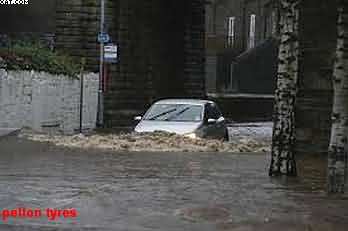
Winter tyres are also great in wet conditions and can give the driver complete confidence when driving on wet and flooded roads. The winter tyres will get rid of all the water that the heavens can throw at us?
I always have winter tyres fitted to our vehicles, and last week was just in case. My daughter has recently moved into a house in Mytholmroyd, and I think you know what must be coming next?
She received a phone call to say that her home was flooded and that she was desperate to get there. She spent Christmas at our house but needed to inspect her house on Boxing Day.
2016 Winter Tyres
We set off in the torrential rain. only to discover that floods had blocked all roads to Mytholmroyd and beyond. We have collected many customer cars in the hills surrounding the Calder Valley. Thus, I had pretty good knowledge. About how to get around the small single-track roads. That would lead me down the Cragg Vale road to my daughter’s house.
What I did not count on were the torrents of water.
Hence, they were teaming down these small, steep valley roads. However, thanks to my trusty winter tyres. We ploughed on through the water and eventually made it to my daughter’s house.
I am writing this on the morning of January 1st, 2016.Up to now, this is only our second frost of the winter.
I believe the same has occurred in the USA . New York has had temperatures in the 20-degree C range, during December and i think that this is also some kind of record,
Some friends of ours have recently gone skiing in Boston?
Well, there was no snow. Except for some artificial stuff. I am sure, though, that winter will return with vengeance, and all those who have bought winter tyres will not feel so bad when they are ploughing through snow with the greatest of confidence, in a car fitted with their winter tyres.
Moving forward to 2022, things concerning the weather have not changed very much. Hence, we are still witnessing milder winters. Keep my fingers crossed that the 2022–23 winter may bring a colder winter for winter tyre sales.
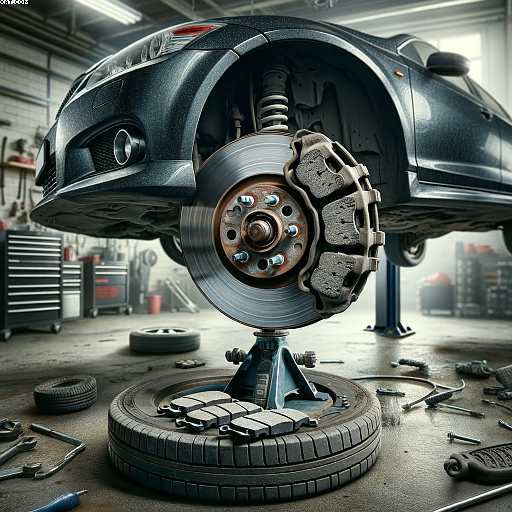
Brakes Fail Actually, is this going to turn out to be a good article? Drivers think that it will never happen to them, but believe me, it is more common than you think. Here are a few ways that may help you in this situation:.
Keep Your Cool and Remain Calm
Don’t panic, first of all. It is presumably easier said than done. Remaining composed, though, will enable you to think more clearly and respond to the circumstances more skillfully.
1- Test the Brakes Once More Sometimes the hydraulic pressure can be built up enough to get them operating again by repeatedly hard and fast pumping the brake pedal. Before attempting more extreme steps, it’s worth a try.
To assist slow the automobile down, use the Engine Brake Shift to a lower gear. By this technique, which is called engine braking, you slow down without applying the brake. It comes especially in helpful when you have to gently slow down on a highway.
2- Turn On Your Hazard Lights
Alert others to your problems. Turning on your hazards signals other motorists that you’re not just a Sunday driver in the fast lane.
3- Use the Handbrake Lightly While you can stop the car with the handbrake or emergency brake, you should only use it as a last option because it can lock the back wheels and create a skid. If using it, do it gradually and gently; never yank it up sharply.
4- Search for an Escape Route.
If in town, look for a safe, open area, or if on the highway, try to coast along to a slow halt on the hard shoulder. To lower the chance of a rear-end shunt, avoid stopping in traffic whenever at all possible.
5- Get Off the Road When you’ve got the car stopped, don’t just stay there. To warn other drivers, move the car off the road if at all feasible and place warning triangles behind it.
6- Get Assistance
Give a local garage or your breakdown cover provider a call once you’ve stopped safely and are out of danger. Call 999 if you are a little unsure about your safety or are in a dangerous area.
7- Give Up on Driving Ever Again Not suitable for purpose, a car with shaky brakes is like a fish and chip shop without vinegar! Till an expert has examined and repaired the car, do not attempt to drive it again.
8- Slightly Local Knowledge
Did you know, for those driving in Yorkshire, that until recently, cars weighing more than 7.5 tonnes were prohibited from using the steep slope of Sutton Bank on the A170 because it was historically so infamous for producing brake failures?
Particularly in places renowned for difficult climbs and tight turns, it is always prudent to plan your route and understand the terrain.
9-A Last Thought
Though it happens rarely, brake failure is a major safety concern. Make sure you’re adhering to the servicing schedule for your car since regular inspections and maintenance might stop such occurrence.
Anywhere in the UK, including Halifax, your neighbourhood garage ought to be able to assist you in maintaining your car in excellent working order. I drive carefully!
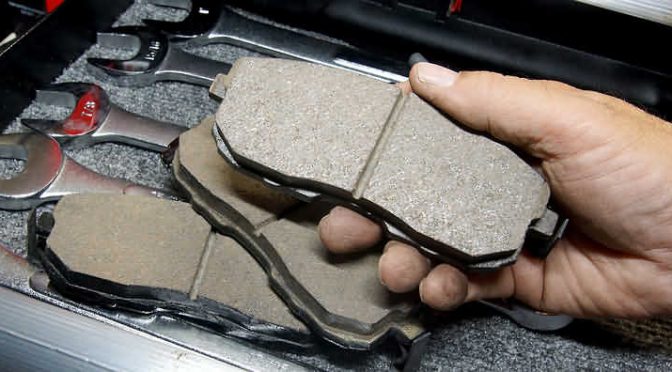
In my opinion the Brakes Fail problem occurs after a DIY brake job. This usually happens on the older car that includes rear brake drums.
I can always remember when i was a junior mechanic
learning the trade. One of the areas that I struggled with was the small springs that held the brake shoes in place.
These little springs never seemed to go back into the same place as when they were removed. This is the kind of problem that the amateur mechanic faces when doing their own repairs. I eventually learned to get it right after much practice, but the DIY mechanic only has one or two attempts.
At the same time don’t think that they realise how important it is to free off all the moving parts that we associate with rear brake drums?
There are small levers that operate the hand brake
and enable the brake shoes to operate in tandem. If these levers are not freed off and lubricated, it could lead to sized-up rear brakes.
This then leads to the overheating of the brakes and the loss of brake fluid, and then Brakes fail. The brakes then fail and the procedures in this article have to be brought into play. I have known brake fluid to reach boiling point and evaporate altogether, leaving the car and driver with Brakes Fail.
This actually happened to me when i was a youth: i over-adjusted the rear drums. These overheated and failed? I stopped on a large side walk in Preston, UK, without injuring anyone.
Pirelli Scorpion SUV All-Season Tyre – a sensible choice for real-world driving
Over the years, I’ve seen tyre trends come and go, but one thing that really does make sense is the move towards all-season tyres, especially for SUVs. The Pirelli Scorpion SUV All-Season tyre is a good example of this new thinking – essentially a summer tyre with genuine winter ability built in.
Modern SUVs are often sold on normal summer tyres, and in all honesty, they can be next to useless once conditions turn slippery. Snow, ice, mud, wet grass – summer tyres simply aren’t designed for that sort of work. Yet most SUV drivers don’t spend all their time on dry motorways.
SUVs and the reality of everyday driving
A lot of SUV owners don’t think of themselves as “off-road drivers”, but the truth is most of them do go off-road from time to time, even if it’s only:
pulling onto a grassy verge
parking on a muddy field
stopping on the edge of a country lane
or visiting a showground or sports field
I’ve seen SUVs completely stuck on grass verges and even on the edge of school playing fields – and that’s without snow or ice being involved.
One local example sticks in my mind. Last summer, our local football club held a very popular car boot sale. It was held on the actual football pitch, with parking nearby. The morning started off bright and sunny, and everything looked fine. Then, as often happens in Yorkshire, we had a sudden heavy downpour.
The result? Chaos. Pirelli Scorpion SUV Tyres
The number of vehicles stuck on wet grass was unbelievable. And strangely enough, the bigger the SUV, the worse it was. Large BMW and Mercedes-Benz SUVs were some of the worst affected, spinning wheels and going nowhere fast.
That’s where an all-season SUV tyre really earns its keep.
What makes the Pirelli Scorpion All-Season different?
The Pirelli Scorpion SUV All-Season tyre follows a growing trend among tyre manufacturers: designing tyres that cope with year-round conditions, rather than excelling in just one season.
Key features include:
a more aggressive tread pattern than a standard summer tyre
better grip on wet grass, mud and loose surfaces
improved traction in cold and wintry conditions
stable handling and braking on normal dry roads
It’s not a hardcore off-road tyre, but it’s ideal for real-world SUV use. It gives drivers the confidence to deal with those awkward situations where summer tyres simply give up.
Why I recommend all-season tyres for SUVs
In my experience, the first replacement of tyres on an SUV is the perfect time to switch to all-season tyres. The original factory-fitted tyres are almost always summer tyres, chosen for low noise and fuel economy rather than versatility.
An all-season tyre like the Pirelli Scorpion:
copes better with cold temperatures
handles wet roads more safely
offers far more grip on grass and mud
reduces the need for seasonal tyre changes
For many SUV owners around Halifax and Calderdale, that makes far more sense than sticking with summer tyres all year.
Pirelli Scorpion SUV Tyres
Pirelli’s wider Scorpion range: Pirelli Scorpion SUV Tyres
Pirelli hasn’t stopped with the all-season option. Their winter range also includes the Scorpion Winter, which has been specifically designed for modern SUVs and crossover vehicles. These tyres focus heavily on:
downhill braking control
cornering stability on snow and slush
maintaining control in harsh winter conditions
They’re particularly suited to larger vehicles running big wheel and tyre combinations, like those fitted to premium SUVs and people carriers.
For drivers who regularly face severe winter conditions, the Scorpion Winter is a very capable option.
A quick word on mud-terrain tyres: Pirelli Scorpion SUV Tyres
For keen off-road enthusiasts and serious 4×4 drivers, mud-terrain tyres are still popular. These tyres offer extreme traction in deep mud and rough terrain, but they come with compromises:
noisier on the road
poorer wet-road handling
faster wear on tarmac
For most SUV drivers, they’re overkill. An all-season tyre is usually the far better balance.
Final thoughts from Pellon Tyres
The Pirelli Scorpion SUV All-Season tyre fits perfectly with how most SUVs are actually used. It offers year-round capability, better grip in poor conditions, and far more confidence when the weather turns or the ground gets slippery.
Around Yorkshire, where rain, cold snaps and muddy verges are part of everyday driving, all-season SUV tyres just make sense. They’re not about extreme off-roading – they’re about practicality, safety and peace of mind.
If you’re replacing your SUV tyres and want something more versatile than a standard summer tyre, the Pirelli Scorpion All-Season is well worth considering. And if you’re unsure what’s best for your driving, call into Pellon Tyres and we’ll give you honest advice, based on how you actually use your vehicle.
Under-inflated tyres: Research carried out by Michelin revealed that drivers are letting tyre pressure affect them financially.
Under-inflated tyres – how drivers are throwing money away without realising
There’s no doubt about it – motorists are throwing money away, and most of them don’t even know they’re doing it. All because tyre pressures aren’t being checked often enough. Here at Pellon Tyres, we see it day after day. Tyres coming off cars that, with the correct pressures, could easily have given another month or more of service.
The evidence is there in front of us every single day. The wear patterns tell the story far better than words ever could.
What under- and over-inflation really does to tyres
If you look at a tyre that’s been run under-inflated, the edges are worn away far quicker than the centre. An over-inflated tyre does the opposite – it wears down the middle while the edges look fine. Either way, the tyre is ruined before its time.
The biggest culprits? SUVs and larger saloon cars.
These vehicles are heavier, often run on wider tyres, and yet tyre pressures are checked less often than you’d think. Even though tyre prices have come down over the years, they’re still a costly item – especially on bigger cars. Letting them wear out early is money straight down the drain.
Under-inflated Tyres
A costly national problem
Under-inflated tyres must be costing this country billions of pounds every year in premature tyre wear. And it’s not just tyres – fuel consumption rises too, because the engine has to work harder to push a car along on soft rubber.
There’s also a bit of a wider “throwaway culture” at play. Oddly enough, the more expensive the car, the less attention some drivers seem to give to the tyres. Fancy dashboards, big wheels, clever electronics – but tyres quietly neglected.
How tyre pressure affects handling and stability
Incorrect tyre pressures don’t just cost money – they change how your vehicle behaves on the road.
Most of us have followed a car towing a caravan on the motorway and noticed that unsettling side-to-side sway. In many cases, that’s down to one of three things:
under-inflated tyres
one tyre lower than the others
overloading or incorrect load-rated tyres
The same thing can happen with cars. Under-inflation causes vague steering, poor stability, and a feeling that the car just isn’t planted properly. It leads to understeer or oversteer, especially when cornering or braking.
We’ve all felt it at some point – taking a bend a bit too briskly and the car doesn’t respond how you expect. If your tyres are near the legal limit or the pressures are wrong, that moment can quickly turn nasty.
All because tyre pressures haven’t been checked.
Under-inflated Tyres
2026 safety update – why TPMS really matters
Modern cars now come fitted with Tyre Pressure Monitoring Systems (TPMS), and despite a few grumbles about another warning light on the dashboard, they’re a genuine step forward for safety and cost saving.
Here’s why TPMS changes things for drivers.
1. Early warning system TPMS constantly monitors your tyre pressures and alerts you when one drops. Think of it as a quiet guardian angel looking after your tyres. It gives you the chance to act before a small issue becomes serious – or expensive.
2. Better fuel efficiency Driving on under-inflated tyres is like walking through soft sand – it takes more effort. Correct pressures mean the car rolls more easily, saving fuel and keeping more money in your pocket.
3. Longer tyre life Tyres aren’t cheap. TPMS helps reduce uneven wear by flagging pressure problems early, meaning tyres last longer and perform better throughout their life.
4. Environmental benefits Less fuel used and fewer tyres thrown away means a smaller environmental footprint. Longer tyre life equals less waste and fewer emissions. A small system making a big difference.
5. Improved safety Properly inflated tyres improve braking, grip and control – especially on wet or uneven roads. TPMS gives drivers one less thing to worry about while driving.
Why TPMS suits UK driving perfectly
Here in the UK, tyre pressures can change quickly. Cold mornings, wet afternoons, and sudden temperature drops all affect tyre pressure. From busy city streets to hilly Yorkshire roads and long motorway runs, TPMS keeps an eye on things when drivers don’t.
Around Halifax and Calderdale, with our hills, bends and mixed surfaces, having tyres at the right pressure really does matter more than people think.
Final thoughts from Pellon Tyres
Low tyre pressures cost money, reduce safety, and shorten tyre life – yet they’re one of the easiest things to prevent. Whether you rely on TPMS or old-fashioned manual checks, keeping tyre pressures right is one of the simplest ways to save money and stay safe.
Good tyre health isn’t just about avoiding punctures. It’s about making every journey smoother, safer and more economical.
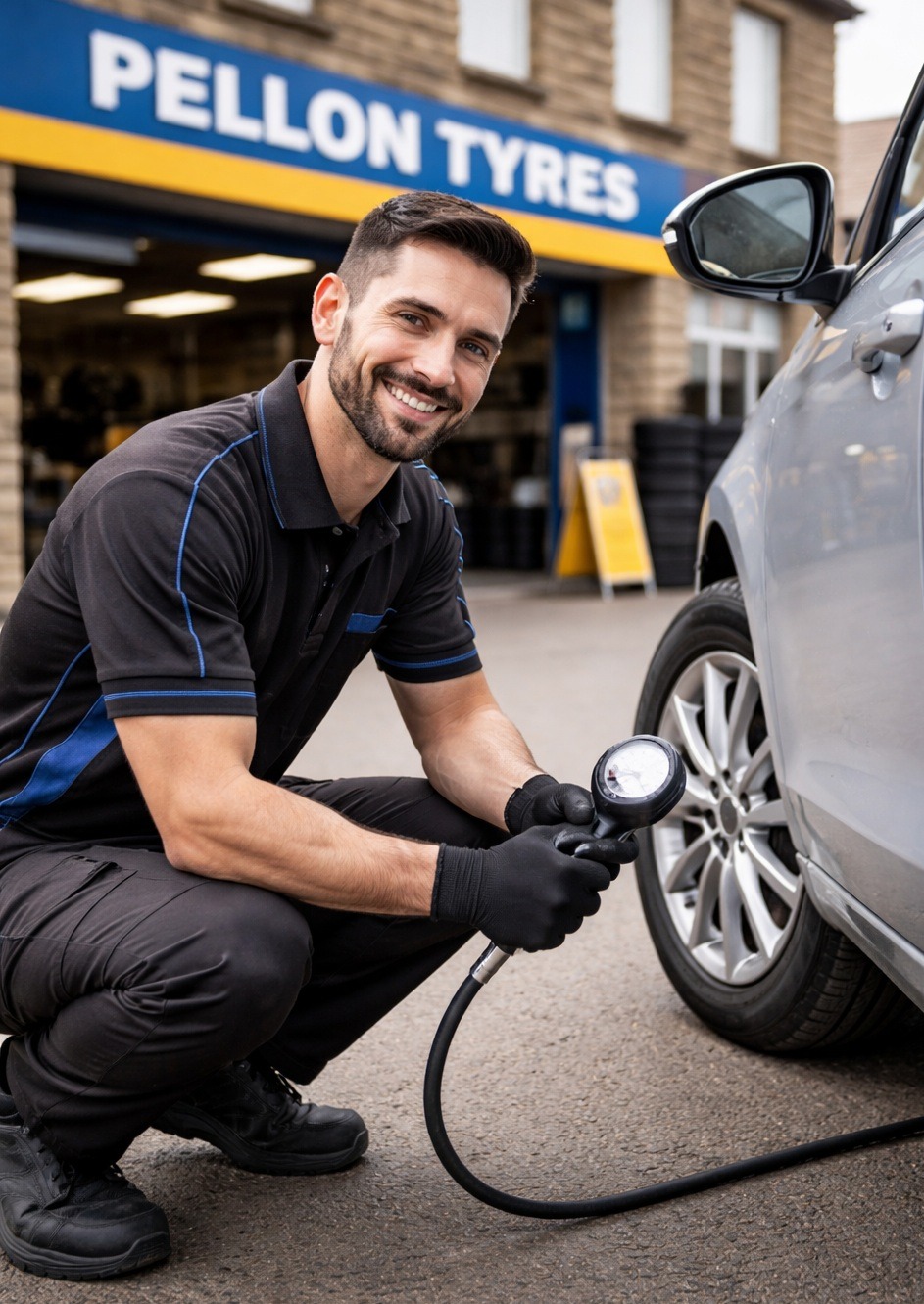
If you’re unsure, pop into Pellon Tyres. We’ll happily check your tyre pressures free of charge and give honest advice – because tyres looked after properly always pay you back in the long run.
Spare Wheel Problem: AAA is calling on automobile manufacturers to stop eliminating spare tyres from new car models.
cars without spare wheels?
This is one of the most stupid things to come out of the auto industry. I recommend that my customers either buy a spare wheel themselves or join one of the motoring organisations, such as the AAA in the USA or the AA here in the UK.
The idea was to lighten the weight of the car
to save on the environmental impact and make the car greener, but the car manufacturers must have saved themselves a fortune by leaving out a spare wheel.
The AAA in America is complaining in this article about the lack of a spare wheel, but I bet their membership has gone up recently?
Listening to my customers in Halifax, UK, there really is a spare. Or the lack of a Spare Wheel Problem, to be precise. It tends to be the older guys who do have a problem. Perhaps that is due to the amount of driving experience that they have had, combined with the number of times that a wheel problem has occurred.
Why Are Spare Wheels Going Spare? A Look at Modern Cars with Pellon Tyres.
Hello, fellow automotive fans and friends!
Today, I’m delving into an issue that has been bothering me lately: why are car manufacturers abandoning the good old spare wheel in many of their models? It’s similar to fish and chips, but without the vinegar, right? A little incomplete!
First, let’s go down memory lane. Remember the good old days of Halifax, with its rich industrial history? Cars have changed in the same way that our town has, from wool and textiles to a more diverse economy. But, as we sit comfy in our wonderful Halifax, sipping a tea, we have to wonder: are these changes for the better?
So, why are manufacturers abandoning up on the spare wheel? It’s all about space and weight. New cars, like modern apartments, aim to maximise space and efficiency. Ditching the spare wheel frees up more space for your luggage or shopping bags from The Piece Hall. Furthermore, less weight means improved fuel efficiency. With petrol costs like they are, who wouldn’t want a few more miles per gallon?
But here’s the catch:
without a spare wheel, what happens if you get a flat? You’re stuck, right? Okay, not quite. Manufacturers now provide alternatives such as run-flat tyres and puncture repair kits. Even with a puncture, run-flat tyres may take you up to 50 kilometres. It’s like having a Yorkshire Terrier: tiny but powerful!
At Pellon Tyres, we’ve seen plenty of these shifts. We appreciate that, while this progression makes sense from a bird’s-eye perspective, it’s not much comfort when you’re stuck on the M62 with a flat. That’s why we’re here to assist, whether it’s installing run-flats or providing information on puncture repair supplies.
And don’t forget about the environmental impact.
Less weight equals lower emissions, which is fantastic for our beautiful Yorkshire countryside. We are all for greener cars, but we also realise the need of practicality. It’s similar like wearing wellies in the Yorkshire Dales: you want to enjoy the view without getting trapped in mud!
So what is the verdict?
Do we support or oppose this change? Well, at Pellon Tyres, we believe in keeping up with the times while keeping our customers’ demands in mind. Whether you drive a car with or without a spare wheel, we’ve got you covered.
Remember, whether you need tyre advice or just want to talk about the newest in the automotive industry, stop by our garage in Halifax. We’re always up for a nice conversation, especially regarding vehicles and our beautiful town. Until next time, keep those wheels turning and enjoy the journey – even if there’s no spare wheel!
Spare Wheel problem
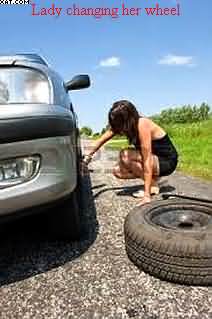
Let’s face it, when you do have a puncture, it is usually in some awkward spot? The last one that I had was when boarding a ferry to France, with five screaming kids sitting in the back. We had to carry on driving onto the ferry before I could attempt to change the wheel.
I had to unload all the holiday stuff
to get a spare wheel, but at least i had one. You would be surprised at the number of drivers who have been stuck with a spare wheel problem? The problem is that they did not have one?
When they bought the car, it was the last thing on their mind!! Does the car have a spare wheel?
We use cookies to ensure that we give you the best experience on our website. If you continue to use this site we will assume that you are happy with it.